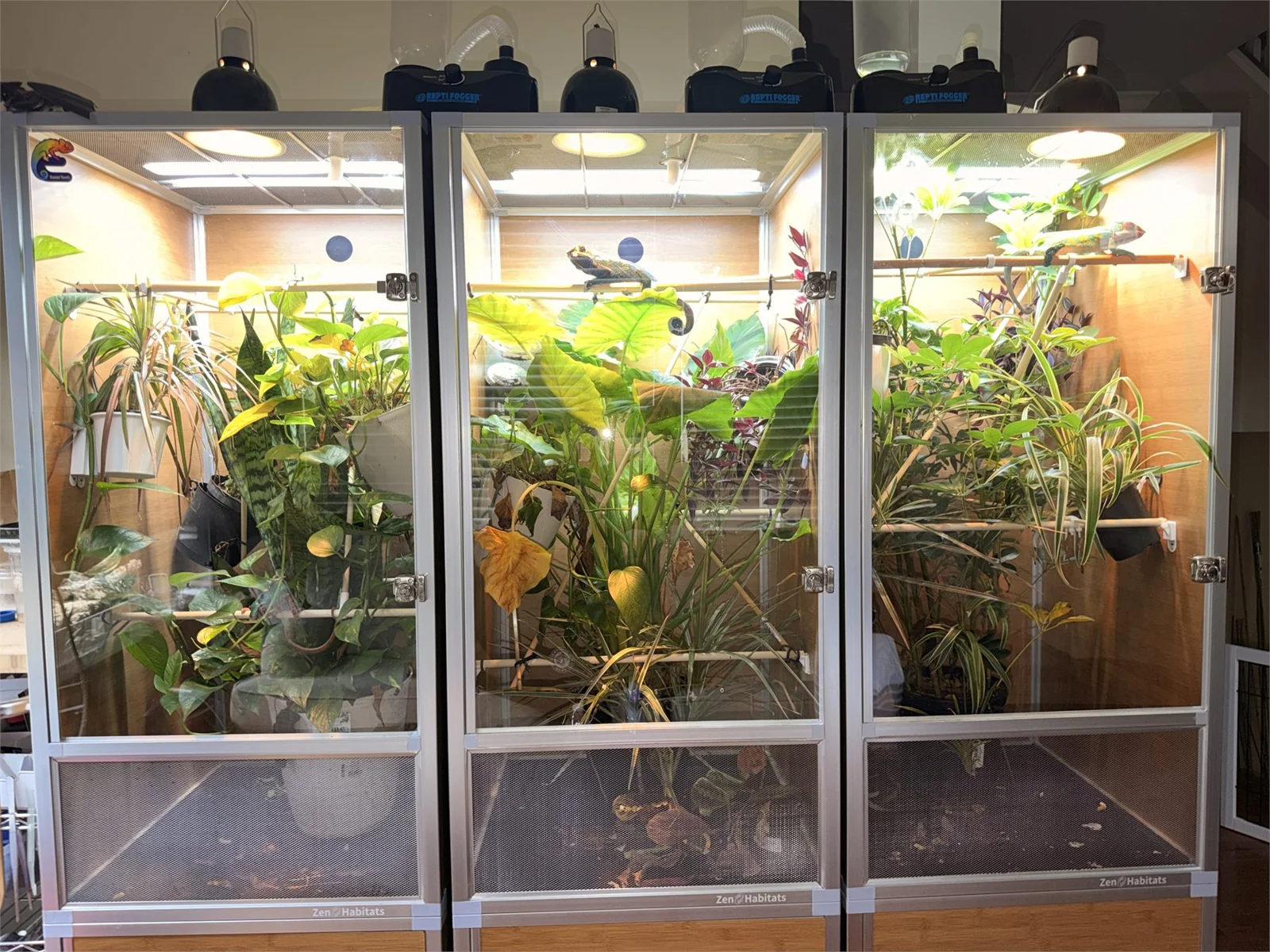
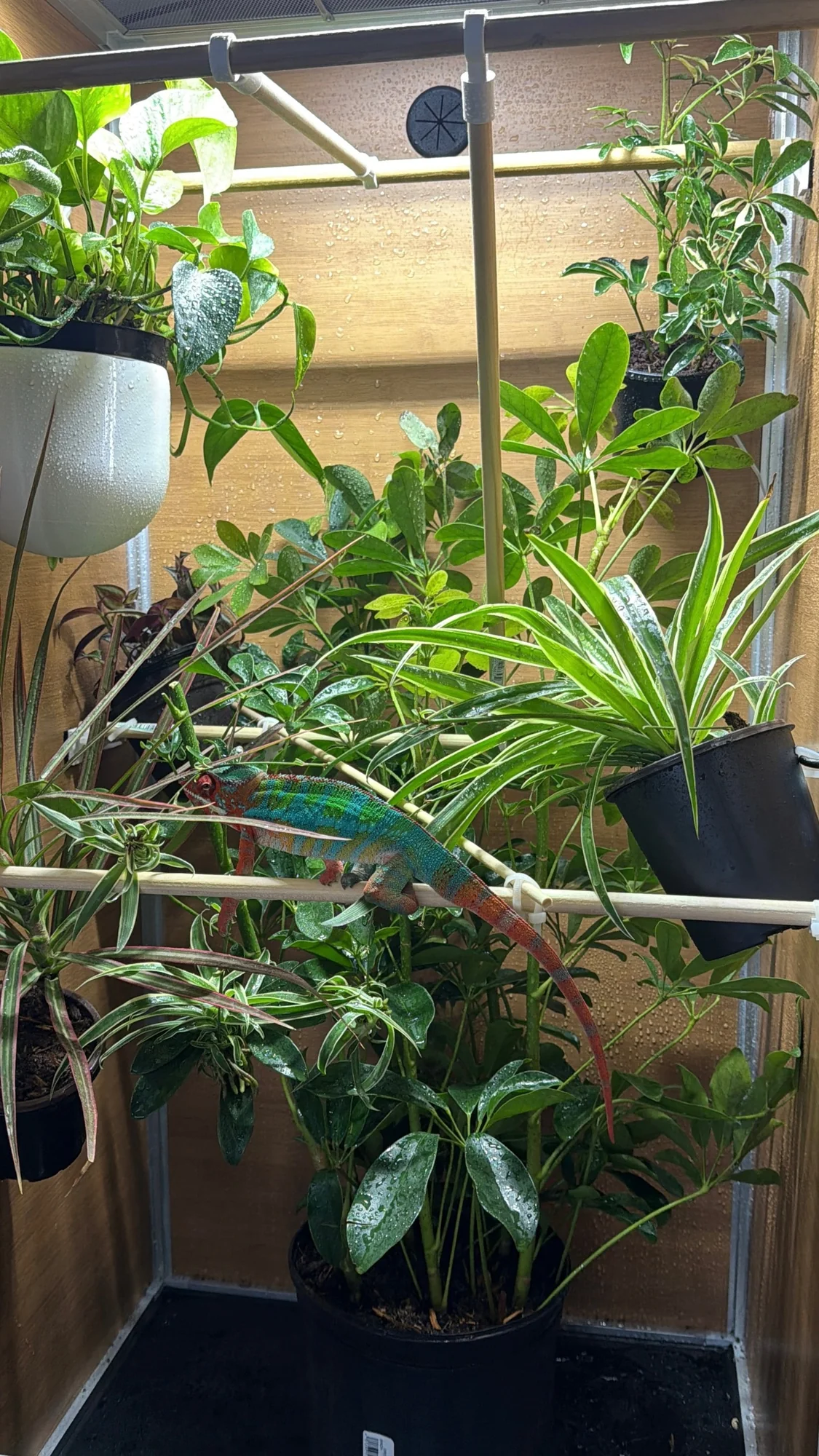
Enclosure & Setup
Space, ventilation, drainage, plants and climbing branches.
Read the guideFree, practical care guides based on how we actually keep our animals. No paywall, no email signup, whether you buy from us or not.
Free guides for every keeper
Space, ventilation, drainage, plants and climbing branches.
Read the guide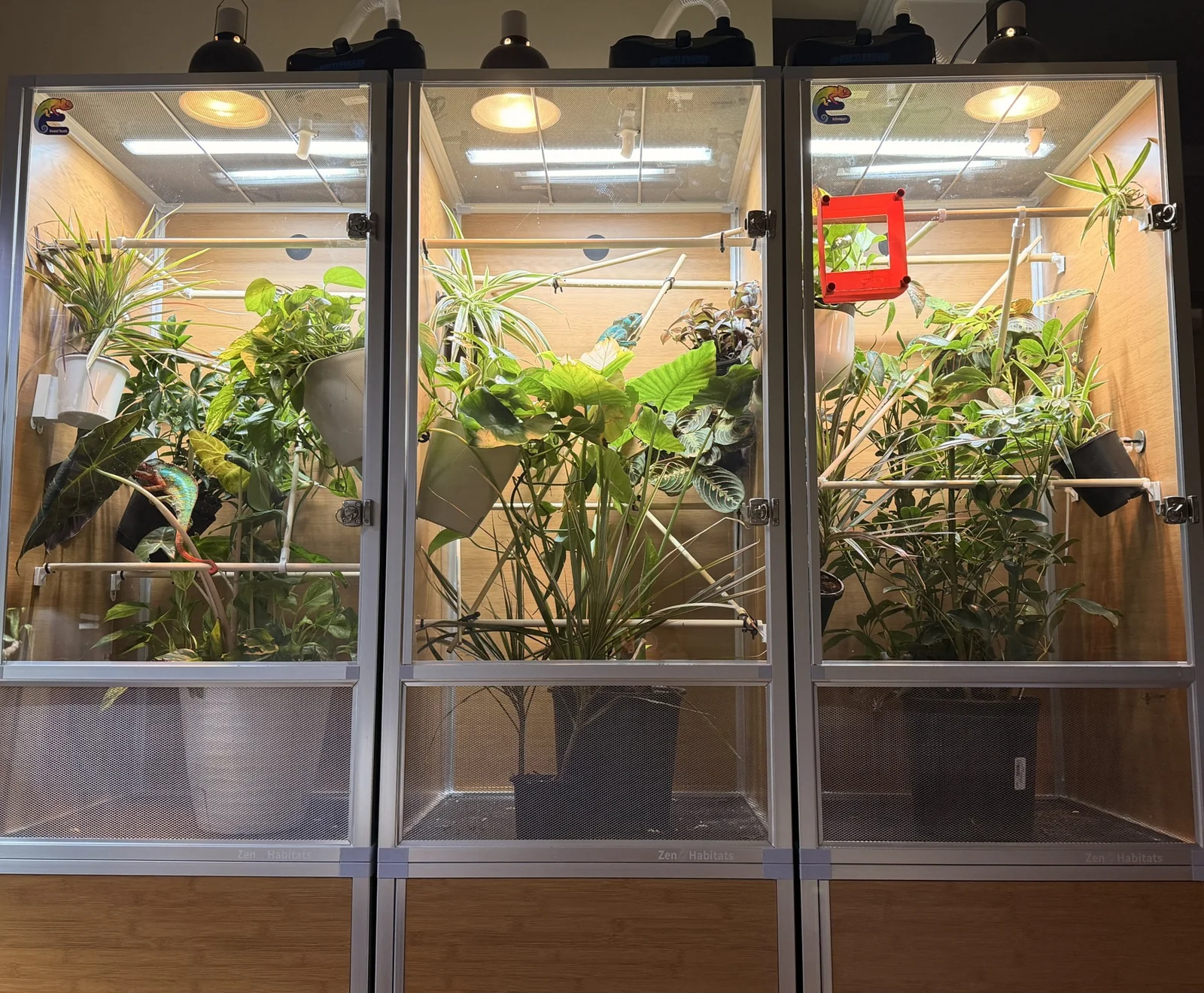
UVB, basking, plant lighting and the daily light cycle.
Read the guide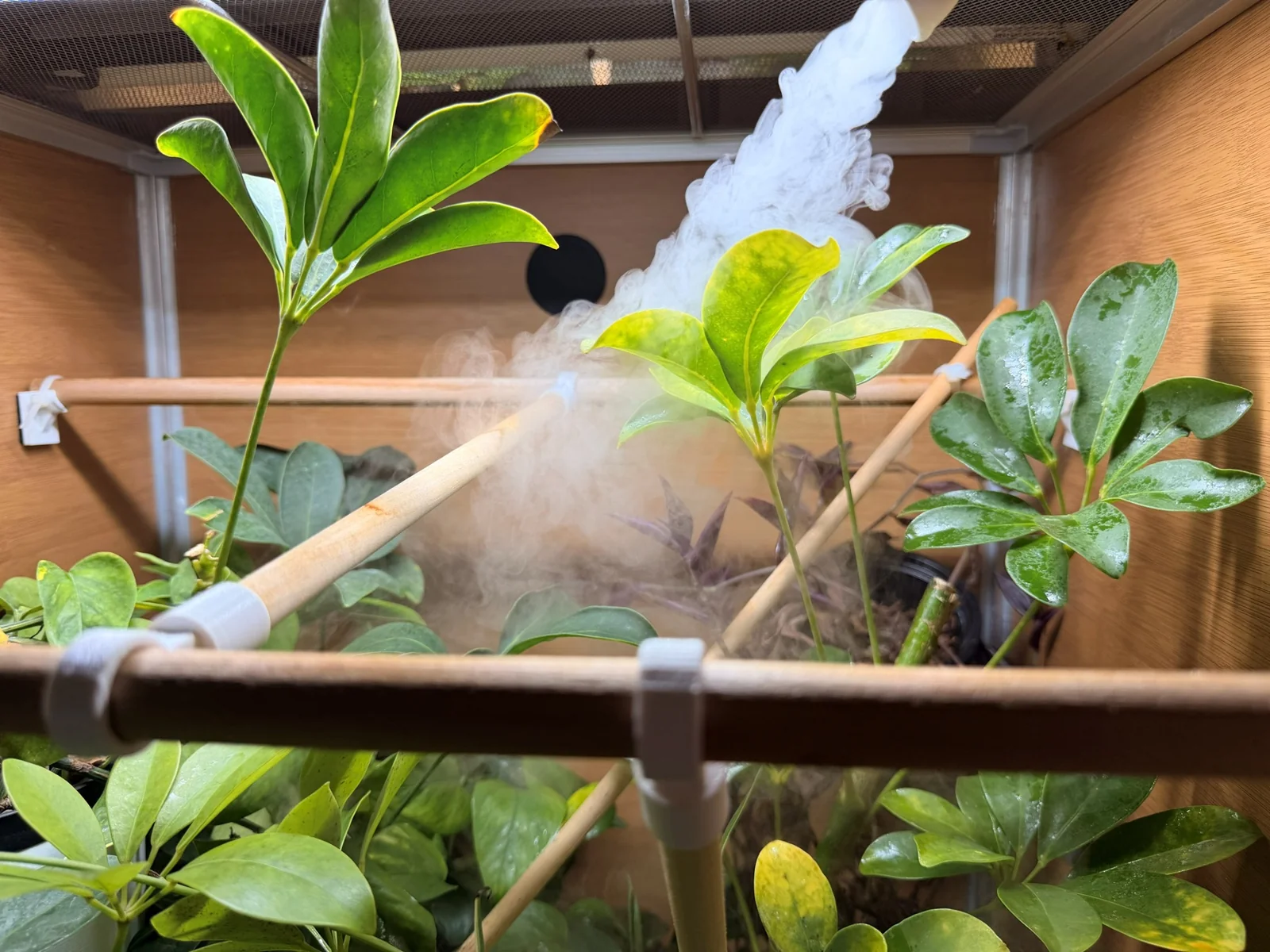
Misting, drying, drinking opportunities and the day/night cycle.
Read the guide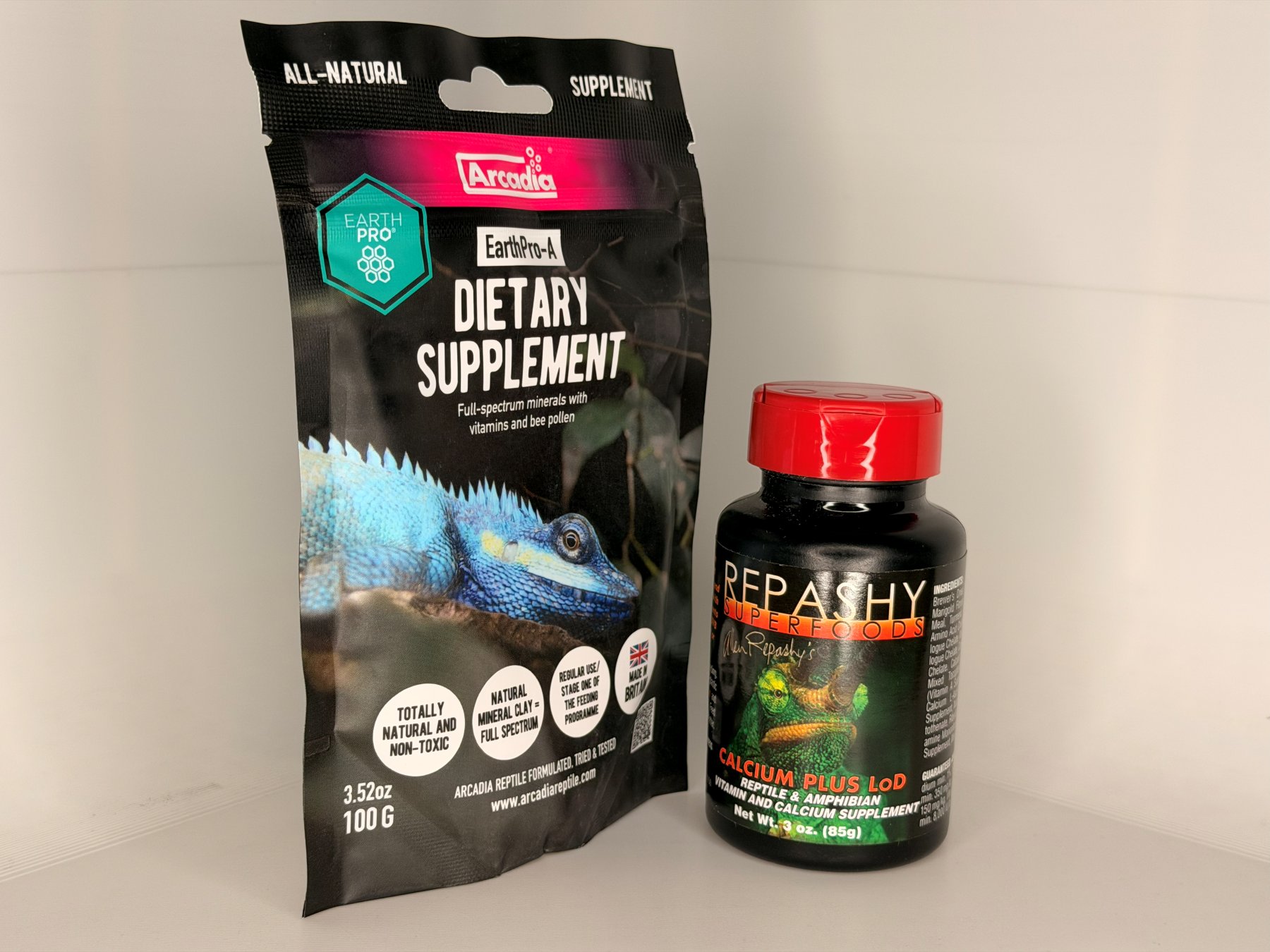
Feeder variety, gut loading, feeding amounts and supplements.
Read the guide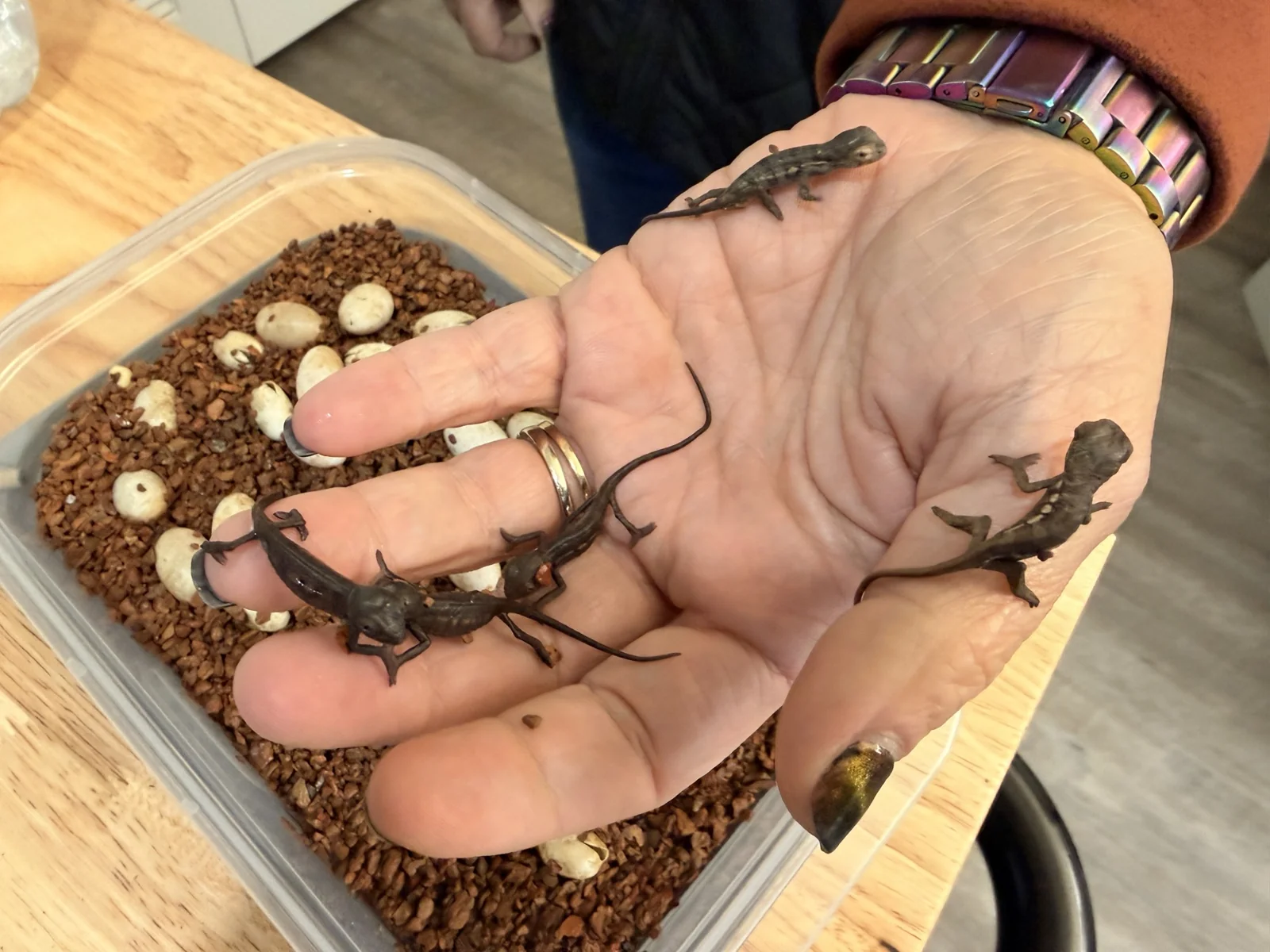
Know your animal, recognize changes and find help when needed.
Read the guide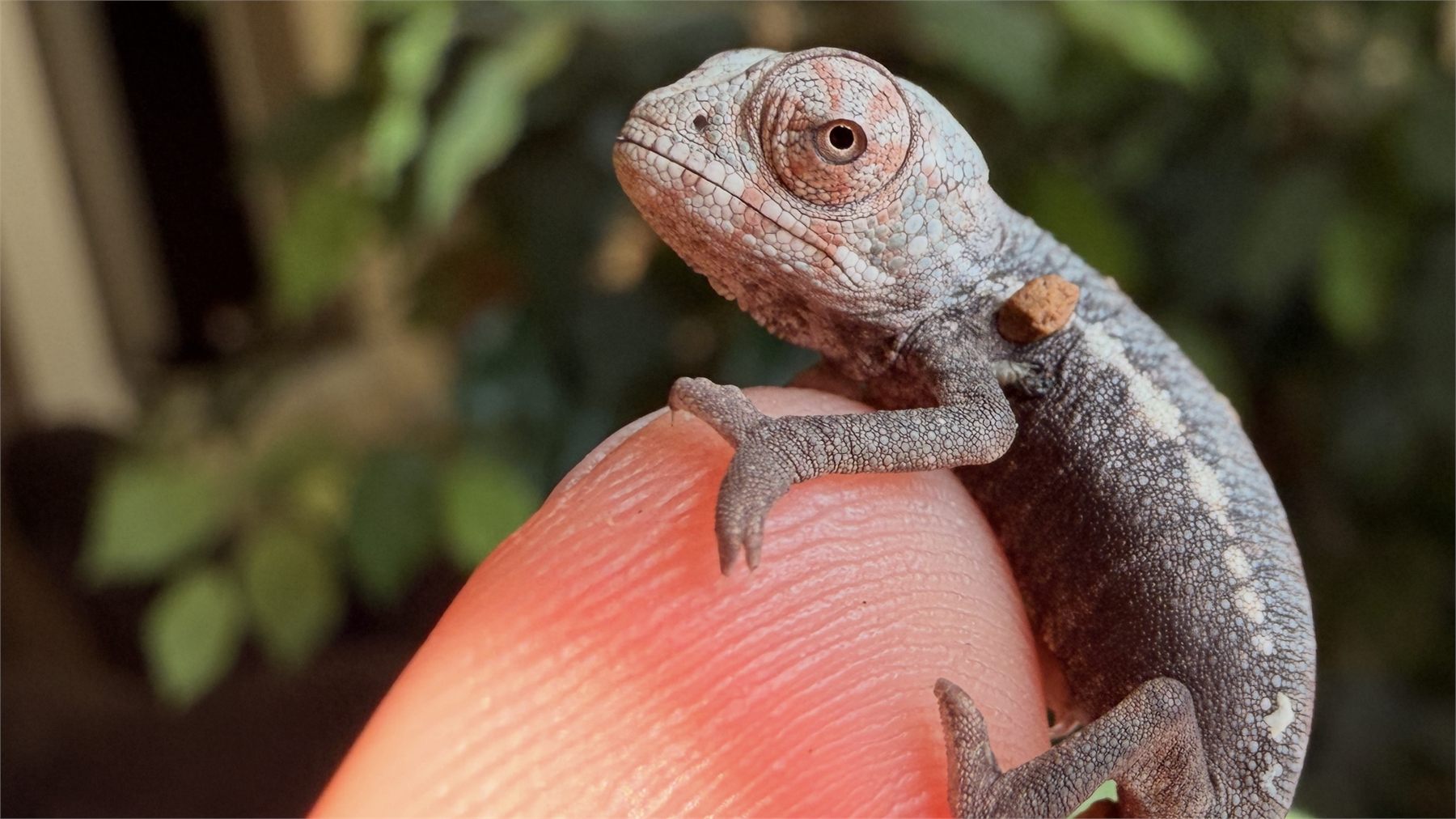
Printable care sheets and checklists to keep beside your enclosure.
Browse downloadsQuick reference
Numbers for a healthy adult. Read the individual guides before relying on any single figure. Context changes everything.
| Parameter | Target | Notes |
|---|---|---|
| Enclosure, adult male | 24 × 24 × 48 in minimum | Larger is genuinely better. Enough height for a gradient, then width. |
| Enclosure, adult female | 24 × 24 × 48 in minimum | Same as the male. Plus a lay bin once she is mature. |
| Basking temperature | 80–85 °F | Measured at the animal's back and head, not the branch surface. |
| Ambient, daytime | 72–80 °F | A real gradient from top to bottom is the point. |
| Night-time drop | Down to 62–68 °F | The drop is beneficial, not something to prevent. |
| Daytime humidity | 40–50% | Should dry out properly between mistings. |
| Night-time humidity | 80–100% | Held up by fogging during the cool hours, then allowed to dry. |
| UVB | UVI 3 at the chameleon's back | Linear T5 HO only. Never a coil bulb. |
| Photoperiod | 12 hours on, 12 hours off | Consistency matters more than the exact split. |
| Lifespan | Males 5–8 yrs, females 3–5 yrs | Females are shorter lived because of egg production. |
Our approach
Almost every chameleon problem we see comes from treating care as a list of numbers to hit rather than an environment that has to work together.
Your basking temperature depends on your ambient temperature. Your humidity depends on your ventilation. Your UVB requirement depends on how far the bulb sits from the animal and whether it fires through screen. Change one thing and you change the others.
These guides give you the numbers, but they also try to explain why the numbers are what they are, so you can adapt when your room, your house or your season is different from ours.
Our husbandry leans heavily on the work of Bill Strand at Chameleon Academy. If you want to go deeper than these pages take you (and eventually you should), his podcast and care resources are the best free education available for chameleon keepers anywhere.
We also draw on Petr Necas at chameleons.info, whose work overlaps with Strand's on much and diverges on some of it. Where they disagree, or where our own practice differs from either, we say so on the page rather than blending it into one voice. Throughout these guides, "we" means what we actually do here; "Bill Strand recommends" and "Petr Necas argues" mean theirs. Each guide lists its sources at the foot of the page.
We are not affiliated with either, and everything on these pages is written by us in our own words. We just think you should know where to find the experts. Husbandry guidance moves as people learn more, so these guides get reviewed rather than written once. Last reviewed September 2026.
A one-page Panther Chameleon Care Guide: temperatures, humidity, UVB, misting, feeding and the supplement schedule, all on a single sheet you can print and pin up next to the enclosure. Same guidance as these pages, compressed to what you need at a glance.
Download the care guide (PDF, 371 KB)
This is the sheet that comes home with every chameleon we place. Revised October 10, 2026.
Ask us. We answer husbandry questions from anyone, whether you bought a chameleon from us or not.