Variety Is the Whole Game
A chameleon fed only crickets for two years is malnourished, however many crickets it eats. Every feeder species has a different nutritional profile, and the way you cover the gaps is by rotating.
Aim for at least three or four different feeder species in regular rotation, with occasional treats outside that. If you can only manage two, make sure neither is the sole staple for long.
Feeder Insects
Staples
- Crickets: the default. Easy to find, good movement to trigger a feeding response, decent protein. Gut load well; they are nutritionally poor otherwise.
- Silkworms: our go-to, and a genuine disagreement. Soft, high moisture, very well accepted, and we have had good results with them. You should know that Petr Necas argues against feeding them: they are around 80% water, which he links to over-hydration and the pale watery urates that go with it; commercial silkworm diets are rarely disclosed, and mulberry-fed worms may carry alkaloids; and he rates their protein-to-fat profile below crickets. He feeds none himself. We do, and we watch the animals rather than the argument, but you are entitled to weigh it up. If it concerns you, they are easy to leave out.
- Dubia roaches: excellent protein-to-fat ratio, long lived, easy to gut load. Some chameleons ignore them at first because they move less.
- Black soldier fly larvae: naturally high in calcium, one of the few feeders that does not strictly need dusting. Excellent rotation staple.
Occasional
- Hornworms: very high moisture, useful for a dehydrated animal. Grow enormous fast; feed while small.
- Superworms: fatty. A treat, not a staple.
- Butterworms: well accepted and fatty. Strictly occasional.
- Flying insects: house flies, blue bottles and moths trigger genuine hunting behavior and are great enrichment.
Avoid
- Mealworms: hard chitinous shell, poor nutrition, not worth the digestive effort.
- Wild-caught insects: pesticide and parasite risk, unless you are certain of the source.
- Fireflies. Toxic to chameleons and reliably fatal. Never.
Size the Feeder Correctly
A feeder should be no wider than the space between your chameleon's eyes. Anything larger risks choking or impaction. When in doubt, go smaller. Two small feeders beat one that is too big.
Gut Loading
This is the step most keepers skip, and it matters more than almost anything else on this page. Your chameleon is eating whatever your feeders ate. An insect shipped in a cardboard tube and fed nothing for four days is an empty shell with legs.
Gut load for at least 24–48 hours before feeding out. Offer:
- A quality commercial dry gut load as the base
- Fresh dark leafy greens: collard, mustard, dandelion, kale
- Carrot, butternut squash or sweet potato for carotenoids
- A water source: water crystals or a slice of orange, never an open dish they will drown in
Those provide carotenoids, which are not the same thing as the preformed vitamin A in Calcium Plus LoD. Chameleons vary in how well they convert one into the other, so treat gut loading as support for the supplement schedule rather than a replacement for it.
Avoid iceberg lettuce (no nutritional value) and go easy on spinach (binds calcium).
How Much and How Often
Treat every number below as a starting point, not a dose. What a chameleon actually needs shifts with enclosure temperature, its stage of development, its body condition and the season. Ages are a rough proxy for development, not a schedule: a well-grown eight-month-old and a slow nine-month-old are not the same animal. Weigh yours regularly and let the trend correct the numbers.
| Stage | How to judge it | Starting point |
|---|---|---|
| Still growing (from six months) | Growth is the goal. Do not restrict. | Daily, 6–10 feeders, tapering as growth slows |
| Adult male, maintaining | Feed so he neither loses nor gains weight. The scale decides, not the calendar. | Every other day, 4–6 feeders |
| Adult female, not gravid | Deliberately restrained, to reduce clutch size and frequency | Every 2–3 days, 3–5 feeders |
| Gravid female | No restriction. She is building eggs and needs the intake. | Feed to appetite until she has laid |
Size matters as much as count. Ten correctly sized insects and ten oversized ones are not the same meal, which is one reason a raw count is a poor way to describe a diet. Size them as set out above before you count them.
Why Adult Females Eat Less
Overfeeding an adult female drives her to produce larger and more frequent clutches of infertile eggs, which is physically exhausting and shortens her life considerably. Restrained feeding for adult females is not neglect. It is one of the most important things you can do for her. Keep monitoring her weight, and ask if you are unsure.
This applies to a female who is not carrying eggs. Once she is gravid, stop restricting and let her eat: she is building a clutch, and that is the wrong moment to be short of food.
Supplements
Two products. That is deliberate, and it is the part of this guide worth reading twice. Getting supplementation wrong in either direction causes real harm: too little calcium leads to metabolic bone disease, too much vitamin A or D3 causes toxicity.
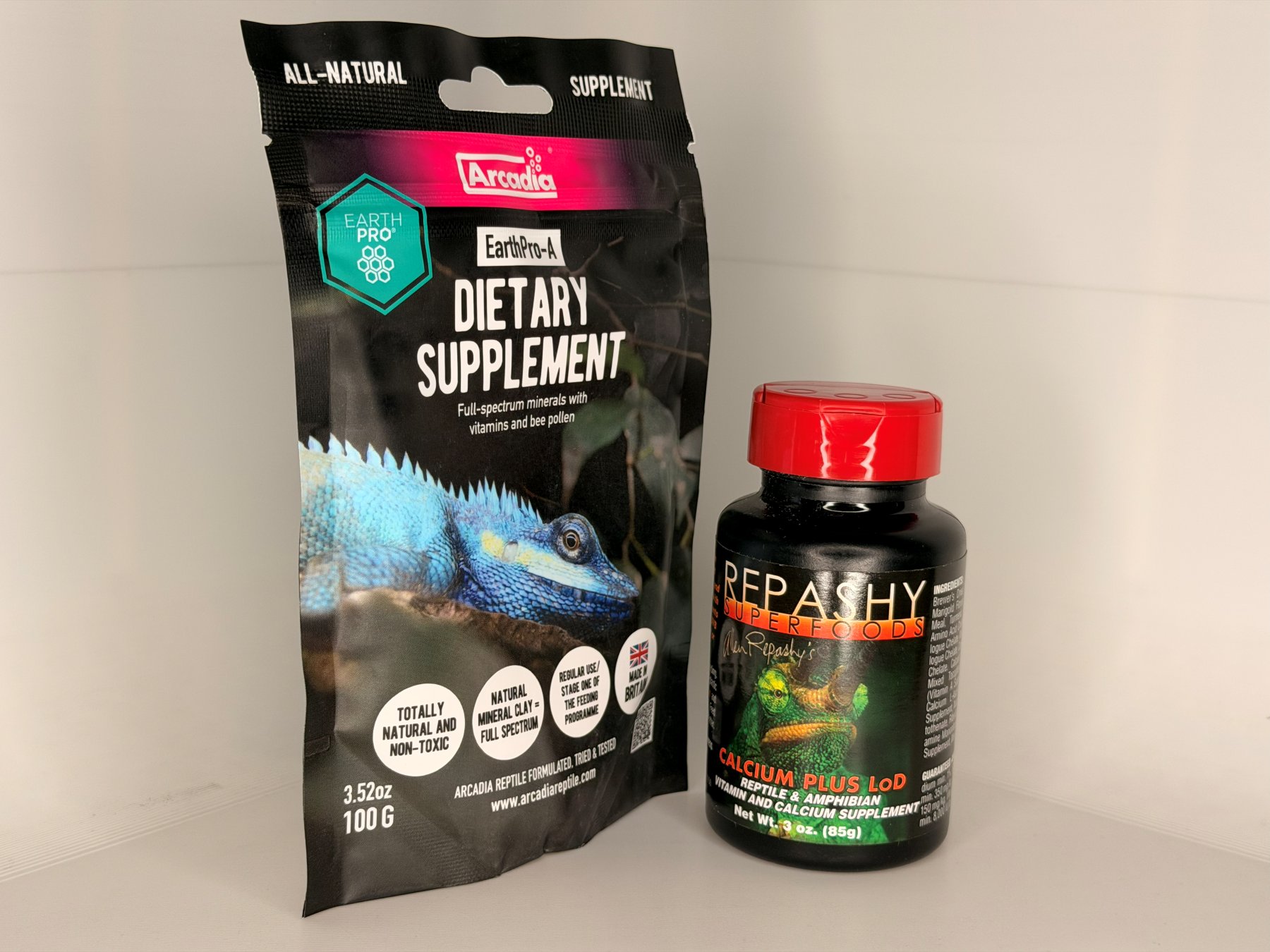
We use Arcadia EarthPro-A at routine feedings and Repashy Calcium Plus LoD about twice a month. That is the whole schedule. Calcium Plus LoD already contains both D3 and preformed vitamin A, which is exactly why you do not add a separate D3 or multivitamin product on top of it. Alongside proper UVB and decent gut loading, those two cover it.
| Supplement | Schedule | Why |
|---|---|---|
| Arcadia EarthPro-A | Routine feedings | The everyday one. A very light dusting is enough. |
| Repashy Calcium Plus LoD | Roughly twice a month | Supplies D3 and preformed vitamin A together. Easy to overdose. Be strict. |
| Anything else | Not on this schedule | No separate D3 or multivitamin. LoD already covers both. |
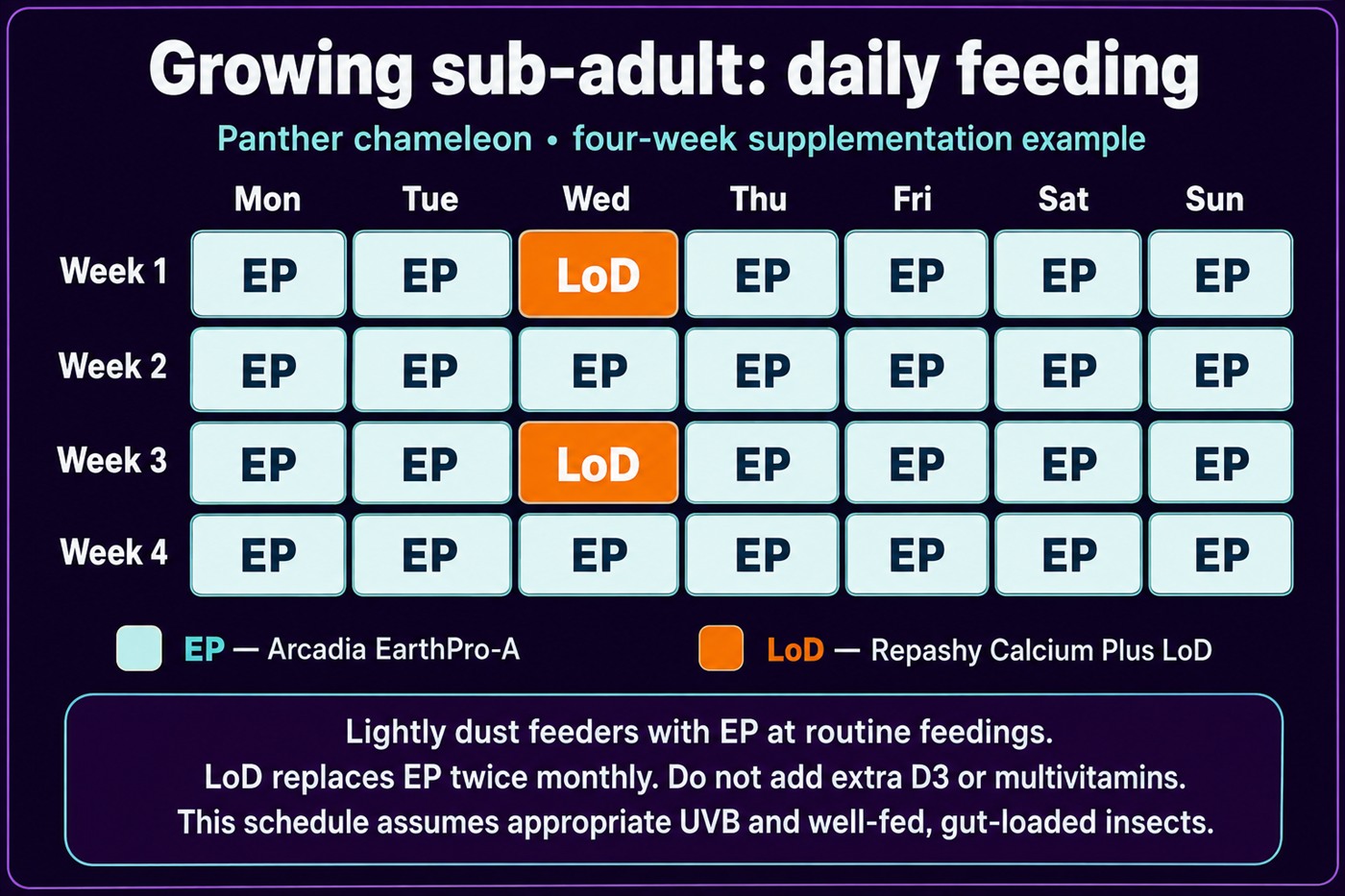
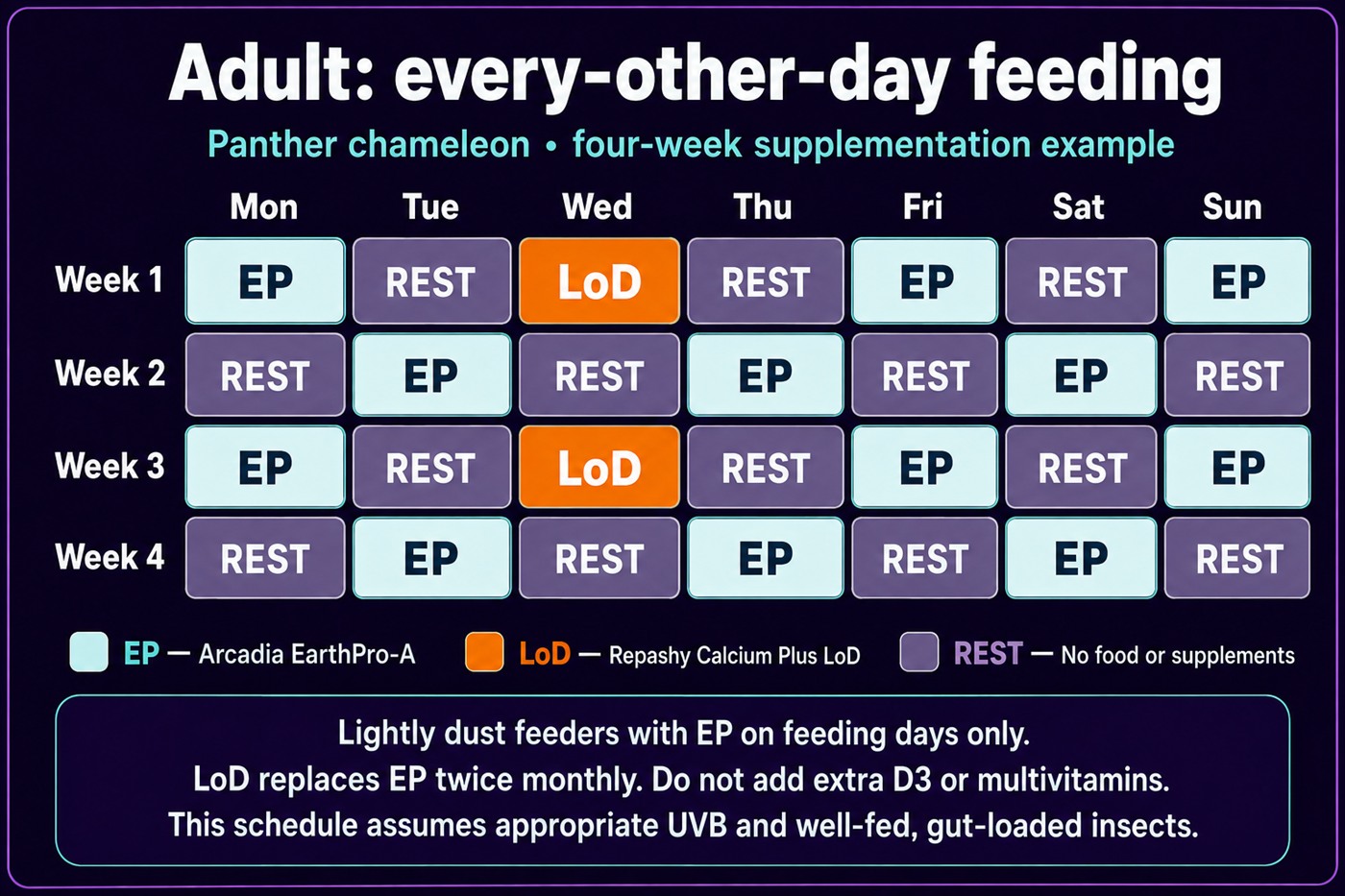
Both examples show a male. An adult female who is not gravid eats less often again, every two to three days, so her calendar has fewer feeding days than either of these. The dusting rule does not change; it simply lands on fewer of them.
Over-supplementing causes real harm, and so does under-supplementing. Follow the specified products and schedule, and ask us before substituting.
"Dusting" means a light coating, not a snowball. Put feeders in a bag or cup with a small pinch of powder and shake gently. You want them dusty, not white.
If your UVB is correct and your gut loading is good, you need far less supplementation than the tub suggests. Supplements fill gaps; they do not replace the system.
Cup Feeding
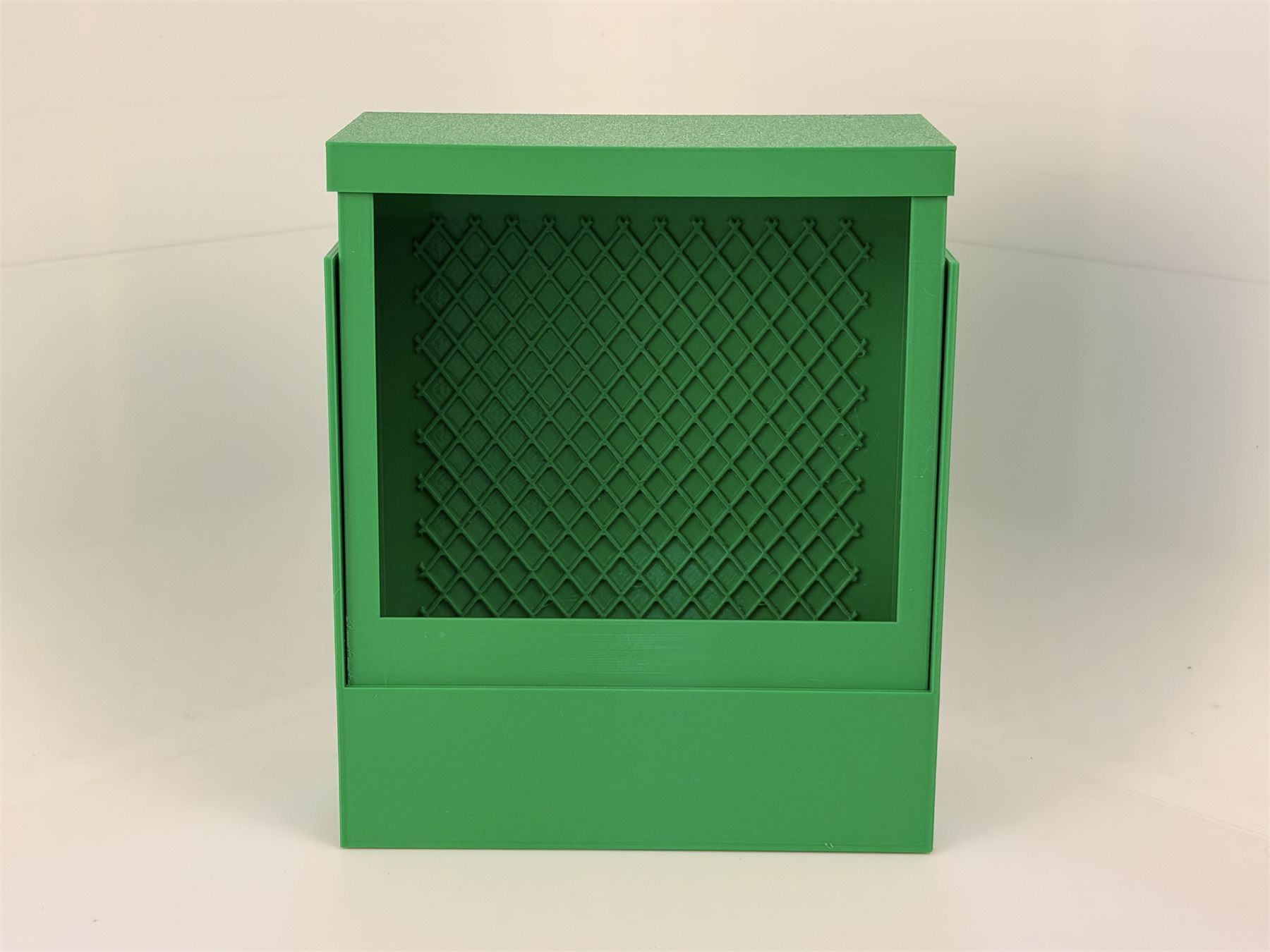
A cup feeder keeps feeders contained, stops crickets escaping into your substrate, and lets you see exactly how much your chameleon actually ate, which is a valuable daily health check.
- Mount it where your chameleon travels, so it gets noticed
- Keep it out of direct mist so dusting powder is not washed off
- Opaque or textured sides help stop feeders climbing out
- Remove uneaten feeders daily: loose crickets will chew on a sleeping chameleon
Never Mount a Feeder in the Top Third
Keep cup feeders in the lower two-thirds of the enclosure, away from UVB and heat lamps. Feeders cooked under a basking bulb dry out and die, and PETG printed parts, including ours, will soften and deform with sustained heat and UV exposure.
We make our own three-piece feeder system for exactly this job. Have a look at the feeder systems.
Hydration Through Food
High moisture feeders contribute genuinely to hydration. Hornworms and silkworms are mostly water, and are a useful tool if an animal is drinking poorly or recovering. They do not replace misting, but they help.
Common Mistakes
- Crickets and nothing else. Variety is not optional.
- Not gut loading. You are feeding empty insects.
- Over-supplementing. Vitamin A and D3 toxicity are real and serious.
- Feeders too large. Impaction and choking risk.
- Overfeeding adult females. Drives excessive egg production.
- Leaving crickets in overnight. They bite sleeping chameleons.
- Feeder cup under the basking lamp. Cooks the feeders and warps the cup.
- Free-range feeding only. You never learn how much they actually ate.
Sources for This Guide
The specific articles behind the recommendations on this page. We have read them, and if you want to go further than this guide takes you, they are where to go next.
- Basics: Chameleon Nutrition, Bill Strand, Chameleon Academy
- Food Dose for Chameleons (PDF), Petr Necas, chameleons.info
- Silkworms Alert, Petr Necas, chameleons.info