Why Bowls Do Not Work
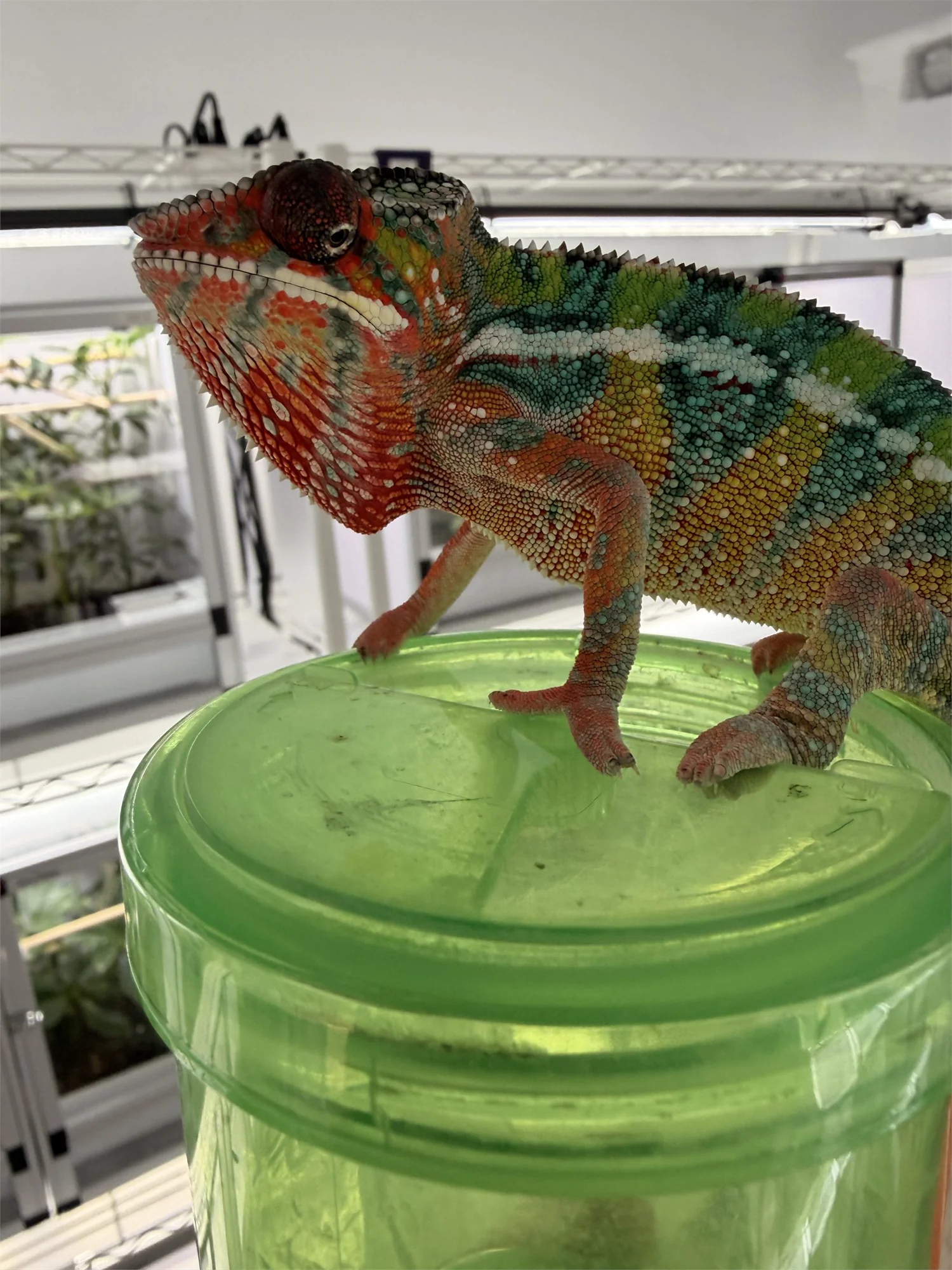
Panther chameleons evolved drinking rain and dew from leaves. Their instinct responds to moving water: droplets running down a surface. A still bowl of water simply does not register as a drink, and most chameleons will dehydrate beside a full water dish without ever touching it.
So everything below is about producing moving droplets, often enough and for long enough that your chameleon has real opportunities to drink.
Misting
Misting is how you put drinkable droplets on leaves. It is one part of the cycle rather than the whole of it: fogging holds the humidity up overnight, misting and a dripper give your chameleon something to actually drink, and the daytime dry-down keeps the whole thing safe.
| When | Duration | Purpose |
|---|---|---|
| Early morning, before lights on | 2–3 min | The main drinking session. Mirrors dawn dew. |
| Midday | 1–2 min | Possible, but not something we recommend. See below if you want to do it. |
| Evening, about 30 min after lights off | 2–3 min | Second drinking opportunity. The wait lets temperatures drop first. |
A ten second spray wets nothing. What you are aiming for is enough water on the leaves that droplets sit and run once the session ends. One to two minutes usually does it, longer if your enclosure is well planted and dries fast. Watch the leaves rather than the clock.
The early session runs before or around lights-on, so your chameleon may still be asleep through the spraying itself. That is fine, and it is rather the point: the drink comes afterwards, from the water you left behind on the foliage. You are setting the table, not feeding.
Aim mist at the leaves and branches rather than directly at your chameleon. They will move to where the water is. Spraying an animal in the face is stressful and counterproductive.
On midday misting: we do not recommend it. Misting into a warm, lit enclosure is the warm-and-wet combination you are otherwise trying to avoid. If you do want a midday session, do it properly: turn the lights off and give it about thirty minutes for the air temperature to come down, then mist, then wait another thirty minutes before the lights come back on. That sequence, cooling and darkening before the rain and warming up afterwards, is what actually happens in a thunderstorm, and it is far closer to what the animal is built to expect than a burst of water under a hot basking lamp.
Automate It If You Possibly Can
An automated misting system on a timer is one of the highest-value purchases in chameleon keeping. It runs at dawn whether or not you are awake, it runs when you are at work, and it runs the same way every single day. Hand misting works, but only if you never miss.
Drippers
A dripper produces a slow, steady sequence of droplets running over a leaf, often the most reliable way to get a chameleon to take a long drink. Many animals that ignore mist will sit under a dripper for several minutes.
- Position it so drops fall onto a broad leaf, then run off, not straight onto the substrate
- Run it for an hour or two during the day, not around the clock
- Make sure the runoff reaches your drainage rather than pooling
- A deli cup with a pinhole in the bottom works exactly as well as a commercial dripper
The Day and Night Cycle
Do not chase a single humidity number. Hydration is a cycle, and the three tools do different jobs. Fogging holds humidity up through the night. Misting puts drinkable droplets on leaves. A dripper gives a second, longer chance to drink. None of them replaces the others.
Daytime: roughly 40–50%.
The enclosure should visibly dry out between mistings.
Night-time: 80–100%.
High humidity with cool temperatures, exactly like a Madagascan night.
Treat those as starting points, not targets to defend. Measure where your chameleon actually sleeps rather than wherever the probe happens to hang, and adjust to what you read and to the animal in front of you.
The combination of warm and permanently wet is the dangerous one, not humidity by itself. If your enclosure never dries out during the day, you are misting too often or your ventilation is inadequate. Check that the lower front vent is clear and the chimney effect is working.
Night-Time Fogging
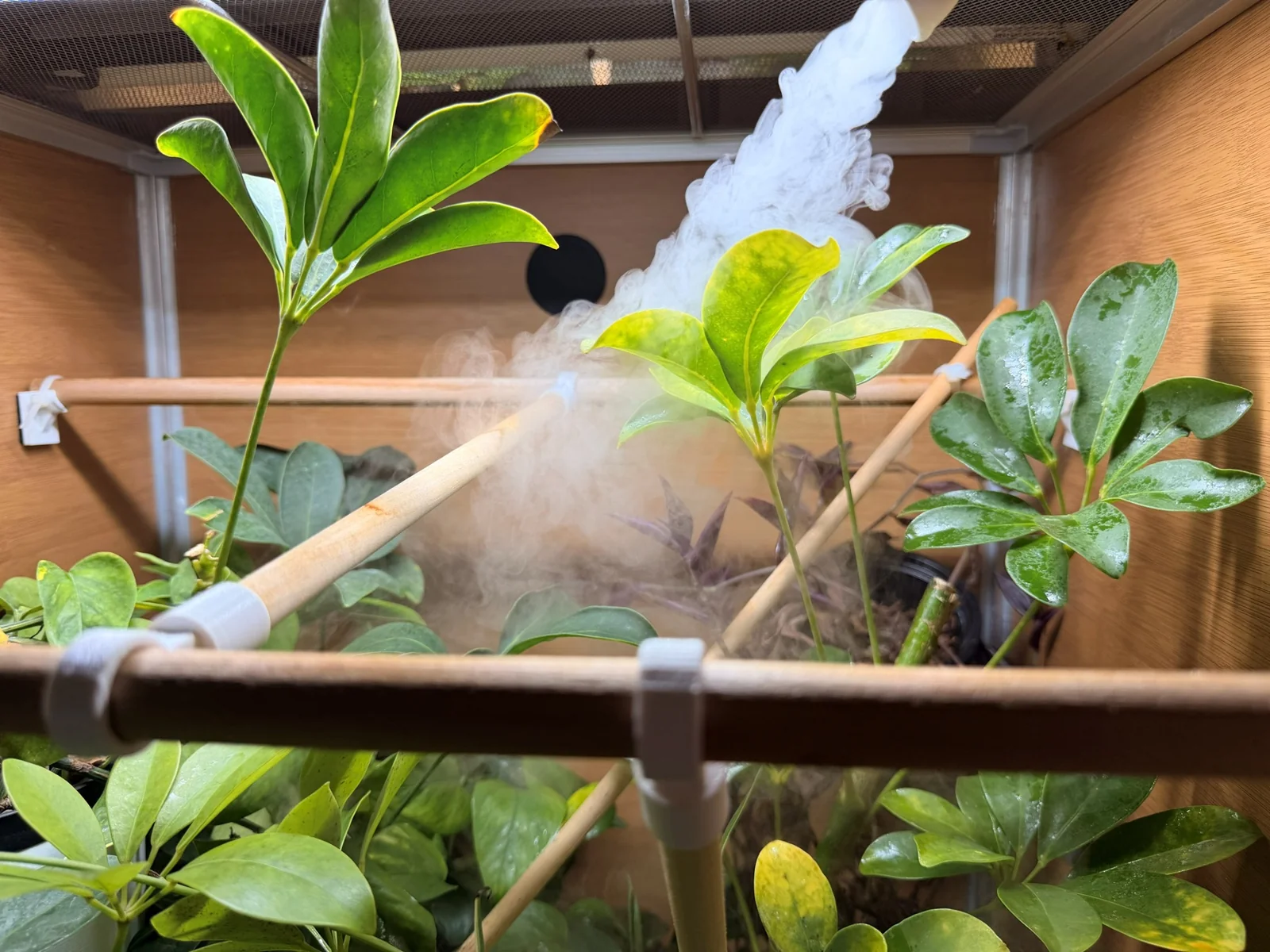
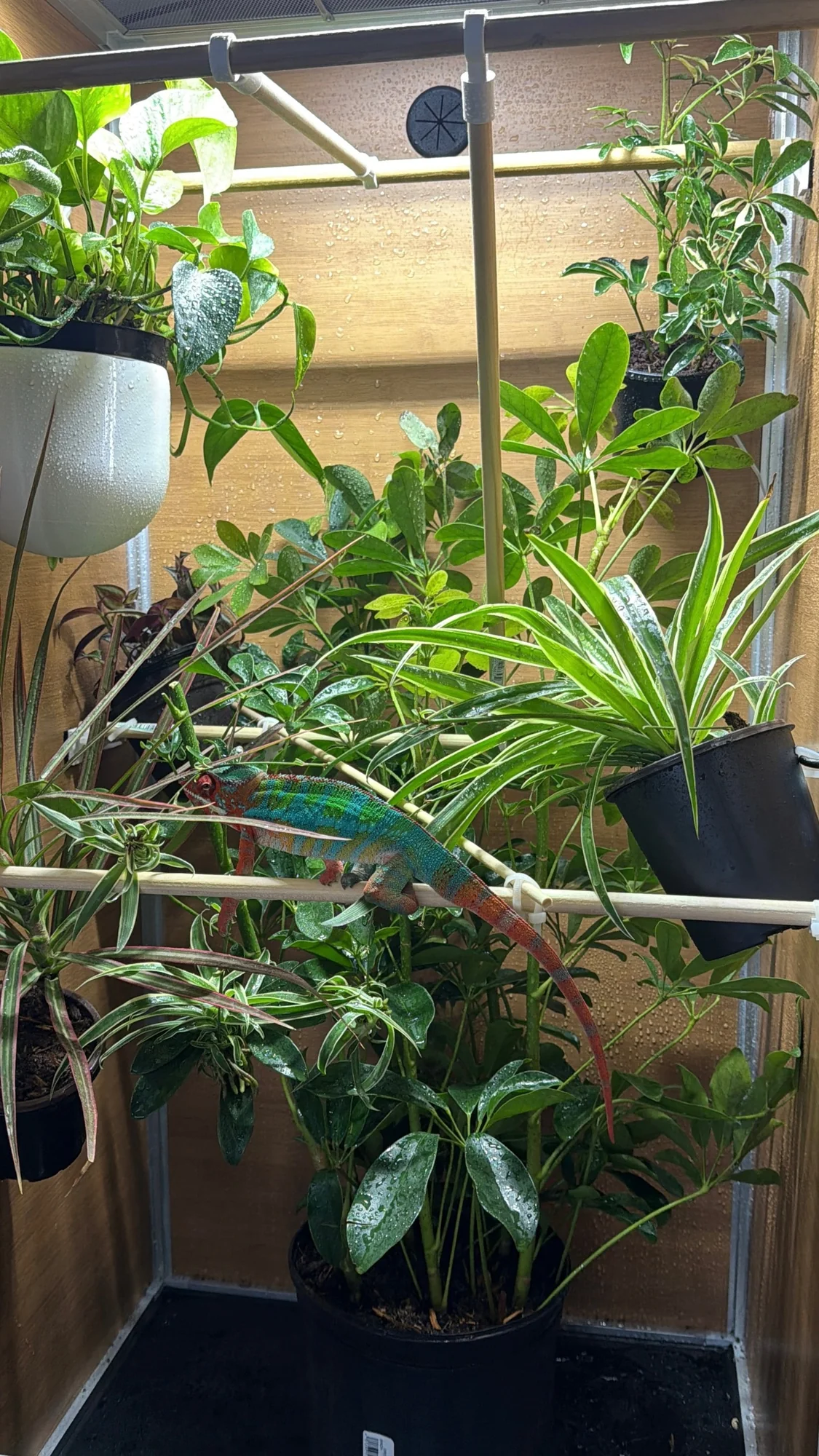
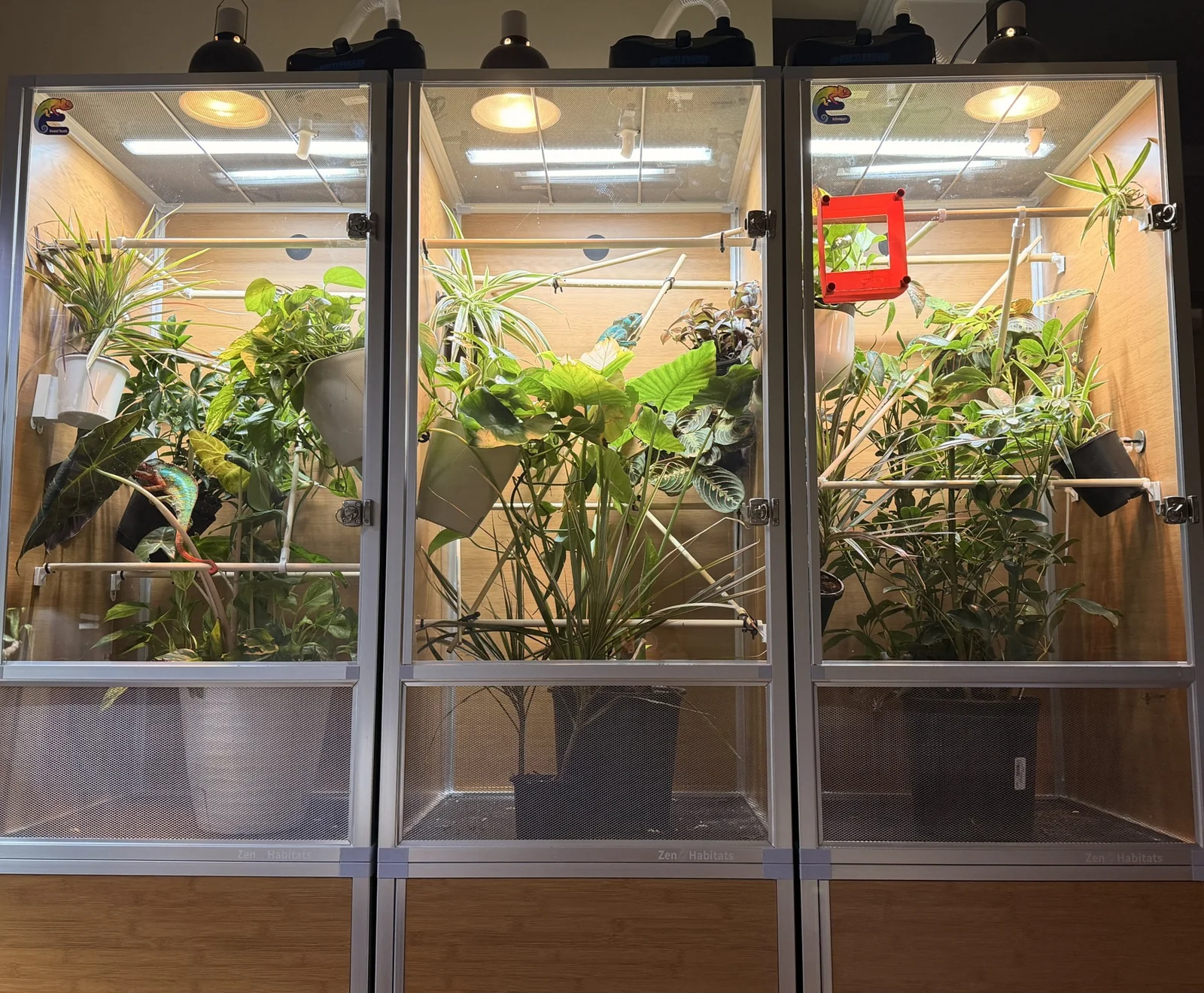
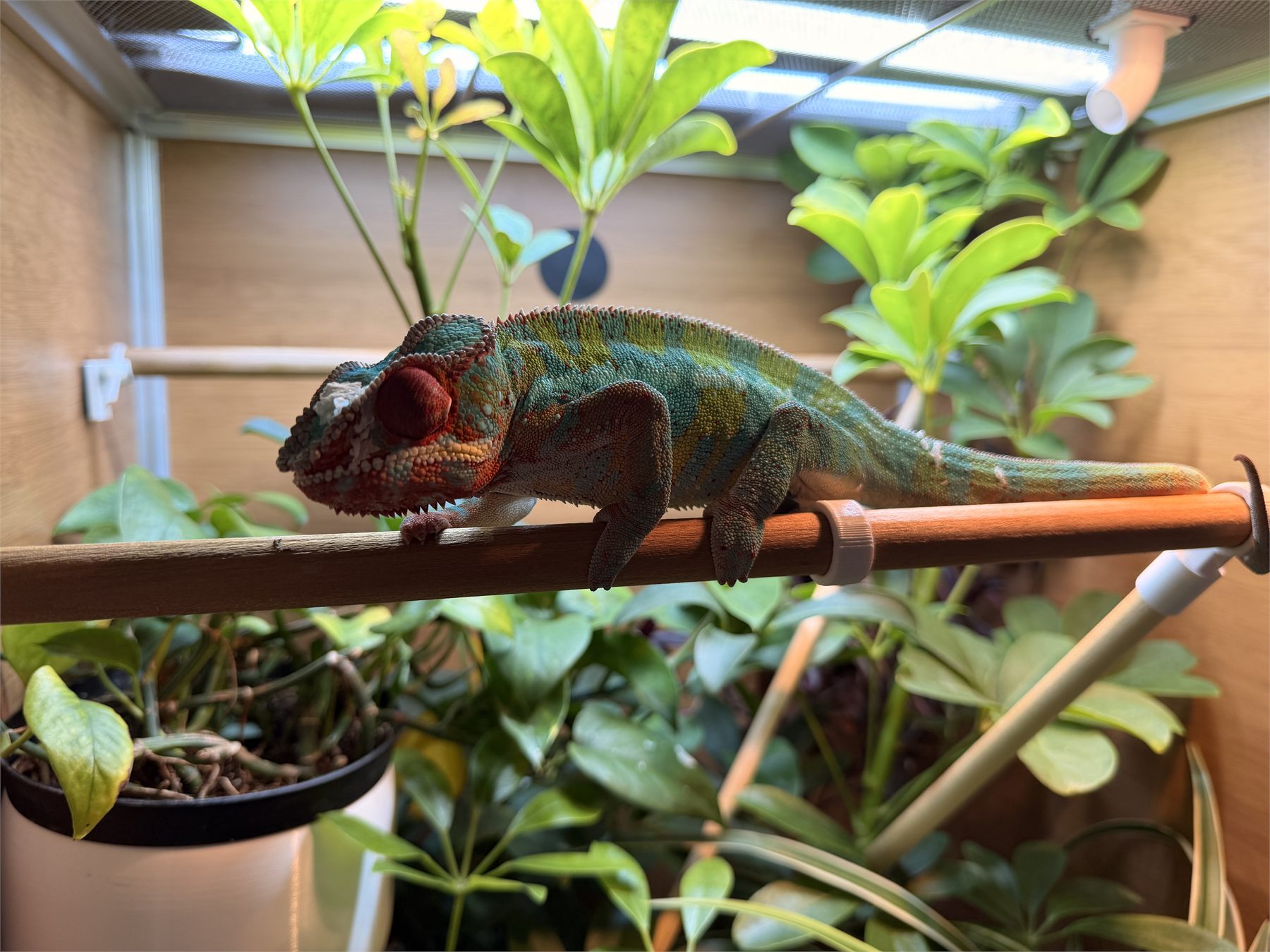
Lights are on only for the photo.
At EctothermInc, night-time fogging is a core part of how we hydrate our animals. We run it alongside cool nights, gentle air movement and droplets waiting on the leaves when the lights come up. A humid night limits how much moisture a chameleon loses while it sleeps; the daytime dry-down is what stops that becoming a problem.
Fogging is not a warm-weather tool. Warm air holds far more moisture, and warm fog in a closed box is how you cause the respiratory problems you were trying to avoid.
- Run it in the coldest part of the night, roughly 1am until the lights come on.
- Only when it is genuinely cool: in the 60s F, under about 20 C. If the enclosure has not cooled down, do not fog.
- Keep air moving. Fog should settle and drift, not sit in a sealed box.
- Never aim the outlet at the animal. You are making a cloud, not pointing a jet at a sleeping chameleon.
- Let it dry. Leaves and branches need the chance to dry once the day warms up.
Clean the Fogger, Not Just the Enclosure
Whatever grows in the reservoir or the tubing gets aerosolised and breathed straight in. Treat a fogger the way you would a medical nebulizer, and note that a weekly vinegar soak on its own is not enough.
- Every day it runs: empty the reservoir, dry it, and refill with fresh water. Do not top up standing water.
- Every couple of days: clean it properly. The EPA's guidance for portable humidifiers is every third day, which is a sensible interval to work to.
- Follow the manufacturer's directions for every wetted part, tubing and fittings included, not just the tank.
- Descale with vinegar as directed, rinse thoroughly, and let everything dry before it goes back together.
This is the part of fogging people skip, and it is the part that makes fogging risky when it goes wrong.
Reading Urates
The most useful routine hydration check you have. Chameleon droppings come with a white or yellowish urate attached, and it is worth a few seconds of your attention every time.
Read it as a trend, not a verdict, and do not treat color as a diagnosis on its own. Some yellow or orange is perfectly normal in a healthy chameleon; wild animals have been recorded at around half orange. Petr Necas goes further, and argues that consistently pure white, wet urates indicate over-hydration, which he considers a more common mistake in captivity than under-hydration. That is his position and it is worth knowing, but color by itself settles nothing in either direction.
Assess a fresh dropping alongside everything else: weight, appetite, activity, eye shape, and what your hydration routine has actually been. Whether the color is changing over time tells you more than any single reading, and whether the urate is moist or dry and chalky matters more than its shade. Do not increase or reduce water simply to produce a particular color.
| Urate appearance | What it might mean | Before you change anything |
|---|---|---|
| Pure white, wet | Often perfectly normal. Necas reads a persistent pure white as over-hydration. | Nothing on color alone. Check weight, appetite, activity and eye shape first. |
| White with some yellow or orange, moist | Within the normal range for a healthy animal | Carry on. |
| Mostly orange and dry | The dryness is the signal here, not the color | Look at eyes, behavior, and what your routine has actually been. |
| Hard, chalky, dark | Consistent with serious dehydration | See an exotics vet. This animal may need fluids. |
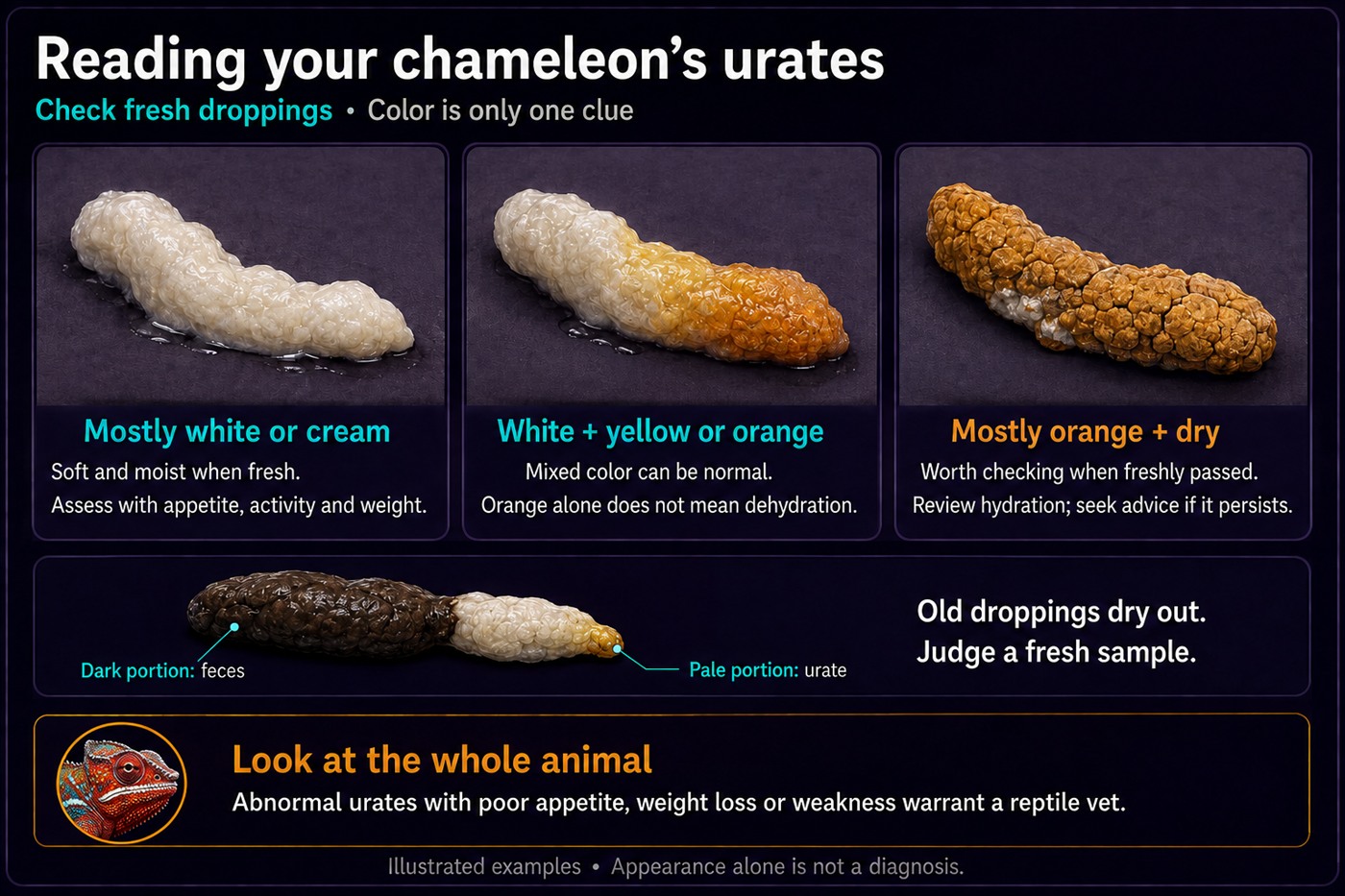
Check every few days. It takes seconds and it is the earliest reliable warning you will get.
Other Signs of Dehydration
- Sunken eyes: the turrets look hollow rather than full and rounded
- Lethargy: sitting still, not moving to bask or hunt
- Wrinkled or loose skin that does not smooth out
- Reduced appetite
- Stuck shed, particularly around the toes, tail tip and casque
Sunken eyes plus dark urates together mean act immediately, not tomorrow.
Which Water to Use
We use reverse-osmosis water, and that is what we recommend. Bottled purified water is a fine substitute. We do not recommend tap water: chlorine and chloramine vary by supply and time of year, and hard water leaves mineral scale that will block your misting nozzles and your fogger.
You may see the concern that RO or distilled water leaches minerals from the body. There is no demonstration of that being a practical problem in chameleon keeping, and your chameleon gets its minerals from its food and supplements rather than from its water.
Common Mistakes
- A water bowl. They will not use it.
- Misting sessions that are too short. A quick burst wets nothing. Mist long enough to leave droplets sitting on the leaves, then let it dry.
- Constant high humidity. Warm and permanently wet causes respiratory infections.
- Never checking urates. You are ignoring your best early warning.
- Chasing urate color. Reacting to a bit of orange by misting more is the other half of the same mistake.
- Misting the animal directly. Stressful; mist the enclosure instead.
- Ignoring runoff. Waterlogged substrate turns anaerobic.
- Warm fogging. Foggers belong to cool night-time hours only.
- A dirty fogger. Anything growing in the reservoir goes straight to the lungs. Fresh water daily, proper cleaning every few days.
Sources for This Guide
The specific articles behind the recommendations on this page. We have read them, and if you want to go further than this guide takes you, they are where to go next.
- Fogging for Chameleons, Bill Strand, Chameleon Academy
- Basics: Hydration for Chameleons, Bill Strand, Chameleon Academy
- Maintenance: Maintaining Chameleon Hydration Systems, Bill Strand, Chameleon Academy
- Myth 21: Completely White Urate Is Good, Petr Necas, chameleons.info
- Use and Care of Home Humidifiers, US Environmental Protection Agency